

This is really exciting news - a planet only twenty light years away that looks as if it could sustain life as we know it. If there is a full functioning eco-system there, that might include intelligent beings, and if a more basic biology exists, it means there is a possible second home for us in reachable distance. After all, 20 light years is right next door in terms of the galaxy.
A new member in a family of planets circling a red dwarf star 20 light-years away has just been found. It's called Gliese 581g, and the 'g' may very well stand for Goldilocks.
Gliese 581g is the first world discovered beyond Earth that's the right size and location for life.
"Personally, given the ubiquity and propensity of life to flourish wherever it can, I would say that the chances for life on this planet are 100 percent. I have almost no doubt about it," Steven Vogt, professor of astronomy and astrophysics at University of California Santa Cruz, told Discovery News.
The discovery caps an 11-year effort to tease out information from instruments on ground-based telescopes that measure minute variations in starlight caused by the gravitational tugs of orbiting planets.
Planet G -- the sixth member in Gliese 581's family -- orbits right in the middle of that system's habitable region, where temperatures would be suitable for liquid water to pool on the planet's surface.
"This is really the first 'Goldilocks' planet, the first planet that is roughly the right size and just at the right distance to have liquid water on the surface," astronomer Paul Butler, with the Carnegie Institution in Washington, D.C., told reporters during a conference call Wednesday.
"Everything we know about life is that it absolutely requires liquid water," he added. "The planet has to be the right distance from the star so it's not too hot, not too cold... and then it has to have surface gravity so that it can hold on to a substantial atmosphere and allow the water to pool."
With a mass 20 percent to 50 percent bigger than Earth's, the newly discovered world has the muscle to hold atmosphere. Plus, it has the gift of time. Not only is its parent star especially long-lived, the planet is tidally locked to its sun -- similar to how the moon keeps the same side pointed at Earth -- so that half the world is in perpetual light and the other half in permanent darkness. As a result, temperatures are extremely stable and diverse.
"This planet doesn't have days and nights. Wherever you are on this planet, the sun is in the same position all the time. You have very stable zones where the ecosystem stays the same temperature... basically forever," Vogt said. "If life can evolve, it's going to have billions and billions of years to adapt to the surface."
"Given the ubiquity of water, it seems probable that this thing actually has liquid water. On the surface of the Earth, everywhere you have liquid water you have life," Vogt added.
The question wouldn't be to defend that there is life at Gliese 581g, says Butler. "The question," he said, "would be to demonstrate that there isn't."
Current technologies won't allow scientists to study the planet's atmosphere for chemical signs of life, but astronomers expect many more similar life-friendly planets to be discovered soon. If one or more of those cross the face of their parent star, relative to our line of sight, then it's possible to gather atmospheric data.
"This system is not in an orientation such that this planet would ever transit, so unfortunately this is not a case where nature has thrown us a bone," Vogt noted. "That being said, it is so close and we have found this thing so soon that it suggests we will start finding a lot of these things in the future and eventually we will find systems that do transit. This is a harbinger of things to come."
The research appears in this week's issue of Astrophysical Journal.
Wednesday, September 29, 2010


Tuesday, September 28, 2010
Live bridges, grown not built
This is appropriate eco-friendly tech if ever there is such a thing. Of course anywhere else in the world trees grow a bit slower than there, the warm wet jungles of the wettest place on earth.
Rubber tree roots are strung across streambeds, take root on the far bank, and held in place until they are thick enough to support weight.Over time they grow stronger, where a log from a felled tree would rot very soon.
My own neighbour, a cattle farmer here in Ontario, Canada,has a willow tree that fell across a stream with roots still in the ground as a living foot bridge, but that was accidental.
Rubber tree roots are strung across streambeds, take root on the far bank, and held in place until they are thick enough to support weight.Over time they grow stronger, where a log from a felled tree would rot very soon.
My own neighbour, a cattle farmer here in Ontario, Canada,has a willow tree that fell across a stream with roots still in the ground as a living foot bridge, but that was accidental.
Wednesday, June 09, 2010
Obsession for Men - dangerous fragrance?
Guatemala City - Biologists tracking jaguars in the Guatemalan jungle might smell nice but it's all in the name of science, with researchers finding the Calvin Klein cologne Obsession For Men attracts big cats.
Biologists Rony Garcia and Jose Moreira from the Wildlife Conservation Society's (WCS) Jaguar Conservation Programme say they use hidden cameras as a primary source for observing and tracking jaguars in the Guatemala's Maya Biosphere Reserve.
But they also rely on Obsession For Men, a cologne known for its complex scent, to help lure then research and hopefully ultimately preserve jaguars in the Central American country.
"The method we are using to study the jaguars here in Guatemala is an invasive method which is based on photographing the individuals by using camera traps," Moreira told Reuters Television.
"It has been very useful using Obsession (For Men) to get the jaguars in front of these camera traps ... and that allows us to estimate with greater confidence the genders and the numbers that live in each studied site."
The discovery that Obsession For Men acted as a magnet for jaguars was the result of an experiment by the WCS's Bronx Zoo in New York.
The WCS was looking for ways to get cheetahs in front of camera traps, and, after several years of testing with different fragrances, found spraying the musky Obsession For Men near the heat-and-motion-sensitive cameras drew the cats for longer than other scents.
They also tried out about 23 other fragrances but Obsession For Men kept the cats' attention for longest, with Nina Ricci's L'Air du Temps coming second.
The practice made its way down to Guatemala, where Garcia and Moreira said they have been recording similar success in the wild since 2007, allowing them to track jaguars and even record their mating rituals.
Garcia said the results will be invaluable to conservation efforts.
"These camera traps help us to identify how many jaguars are living in this area ... (and) helps us to have control over the population and let's us say to the government, to the public, that Laguna del Tigre still deserves conservation," he said.
The WCS said it tentatively plans to expand the use of the cologne in programmes in Venezuela, Nicaragua, Bolivia, Peru and Ecuador in coming years. - Reuters
Biologists Rony Garcia and Jose Moreira from the Wildlife Conservation Society's (WCS) Jaguar Conservation Programme say they use hidden cameras as a primary source for observing and tracking jaguars in the Guatemala's Maya Biosphere Reserve.
But they also rely on Obsession For Men, a cologne known for its complex scent, to help lure then research and hopefully ultimately preserve jaguars in the Central American country.
"The method we are using to study the jaguars here in Guatemala is an invasive method which is based on photographing the individuals by using camera traps," Moreira told Reuters Television.
"It has been very useful using Obsession (For Men) to get the jaguars in front of these camera traps ... and that allows us to estimate with greater confidence the genders and the numbers that live in each studied site."
The discovery that Obsession For Men acted as a magnet for jaguars was the result of an experiment by the WCS's Bronx Zoo in New York.
The WCS was looking for ways to get cheetahs in front of camera traps, and, after several years of testing with different fragrances, found spraying the musky Obsession For Men near the heat-and-motion-sensitive cameras drew the cats for longer than other scents.
They also tried out about 23 other fragrances but Obsession For Men kept the cats' attention for longest, with Nina Ricci's L'Air du Temps coming second.
The practice made its way down to Guatemala, where Garcia and Moreira said they have been recording similar success in the wild since 2007, allowing them to track jaguars and even record their mating rituals.
Garcia said the results will be invaluable to conservation efforts.
"These camera traps help us to identify how many jaguars are living in this area ... (and) helps us to have control over the population and let's us say to the government, to the public, that Laguna del Tigre still deserves conservation," he said.
The WCS said it tentatively plans to expand the use of the cologne in programmes in Venezuela, Nicaragua, Bolivia, Peru and Ecuador in coming years. - Reuters
Monday, June 07, 2010
Harnessing honey's healing power
Harnessing honey's healing power
By Angie Knox
Professor Peter Molan of the Honey Research Unit
Professor Molan is trying to pin down the mystery factor
Honey has been known for its healing properties for thousands of years - the Ancient Greeks used it, and so have many other peoples through the ages.
Even up to the second world war, honey was being used for its antibacterial properties in treating wounds.
But with the advent of penicillin and other antibiotic drugs in the twentieth century, honey's medicinal qualities have taken a back seat.
But that might be about to change - thanks to one New Zealand based researcher.
Working in his Honey Research Unit at the University of Waikato, in the central North Island, biochemist Professor Peter Molan has identified one particular type of honey with extraordinary healing qualities.
Professor Molan has shown that honey made from the flowers of the manuka bush, a native of New Zealand, has antibacterial properties over and above those of other honeys.
Mystery ingredient
He said: "In all honeys, there is - to different levels - hydrogen peroxide produced from an enzyme that bees add to the nectar.
"In manuka honey, and its close relative which grows in Australia called jellybush, there's something else besides the hydrogen peroxide.
"And there's nothing like that ever been found anywhere else in the world."
That "something else" has proved very hard to pin down. Even now, after more than twenty years of research, Peter Molan admits he still has no idea exactly what it is.
But he has given it a name: unique manuka factor, or UMF.
And he has found a way to measure its antibacterial efficacy, by comparing UMF manuka honey with a standard antiseptic (carbolic, or phenol) in its ability to fight bacteria. The results are astonishing.
He said: "We know it has a very broad spectrum of action.
"It works on bacteria, fungi, protozoa. We haven't found anything it doesn't work on among infectious organisms."
Resistant strains
A satisfied user
"I got bitten by an Alsatian. It grabbed my hand and gave me a five-stitch bite. So I went off to the doctors, and they solely used manuka honey, nothing else, no other treatment. I've got barely a scar now, and that's only three weeks ago. Now in the medical kit I carry in the truck, I have manuka honey and bandages, and that's all."
Chris Graham
In fact, he says UMF manuka honey can even tackle antibiotic resistant strains of bacteria - a growing problem for hospitals around the world.
"Staphylococcus aureas is the most common wound-infecting species of bacteria, and that's the most sensitive to honey that we've found.
"And that includes the antibiotic resistant strains - the MRSA - which is just as sensitive to honey as any other staphylococcus aureas."
Clinical trials at the Waikato Hospital have shown that even out of the lab, UMF manuka honey has amazing healing properties.
Nurse practitioner Julie Betts has successfully used honey to treat leg ulcers and pressure sores. And she says it helps healing after surgery - particularly for diabetic patients.
"It has an anti-inflammatory effect as well, so if I want to do several things apart from actually controlling the bacteria in that wound, then that's when I'll use honey."
Cancer treatment
Cancer specialist Dr Glenys Round has also found honey to be an effective treatment.
Beekeeper
The honey is exported widely
"We've been using honey to treat fungating wounds, where the cancer has broken through the skin," she said.
"The results in that situation have been excellent."
Most recently, she has had success in using honey dressings on patients with wounds or ulcers resulting from radiation therapy.
"Most of these patients in the past had tried various other conventional treatments without good success, and that is the reason why at least initially honey was tried."
Most patients seem happy to try the honey treatment.
"They don't have a problem with it at all," said Julie Betts.
"Humans in general have a fondness I think for natural remedies, so they're quite happy to use them."
"I think the problem we encounter is when people don't understand how it works.
"They think that sourcing any honey will achieve the same outcome, and that's not always true."
Worldwide export
That's a view shared by beekeeper Bill Bennett a few kilometres up the road from the hospital.
He and his wife Margaret run the Summerglow Apiaries, one of just a handful of registered suppliers of UMF manuka honey in New Zealand.
They produce between eight and twelve metric tonnes of manuka honey every year, and sell it across the world.
The honey is rigorously tested three times during production for that elusive unique manuka factor; only then can it carry the label "UMF manuka honey".
"It just seems that manuka from a few areas within New Zealand produces a nectar that has this special property," said Bill Bennett.
"There is a lot of manuka honey out there that doesn't have this special property. That's why it's so important to look for the name UMF."
Now, a New Zealand natural health products company Comvita is taking UMF manuka honey one step further.
Dressings
Comvita has set up a new medical products division to take hi-tech honey dressings developed by Peter Molan to the international market.
The new dressings have been designed to take the mess out of honey.
"It's like a sheet of rubber, you can touch it without it being sticky at all," he said.
Comvita has high hopes for the new product.
"Previously untreatable wounds of many types are now found to be treatable by honey," said Comvita's Ray Lewis.
"The global market for wound care is in the range of two to six billion US dollars. So if we can capture just a small percentage of that, we will obviously be doing very well."
By Angie Knox
Professor Peter Molan of the Honey Research Unit
Professor Molan is trying to pin down the mystery factor
Honey has been known for its healing properties for thousands of years - the Ancient Greeks used it, and so have many other peoples through the ages.
Even up to the second world war, honey was being used for its antibacterial properties in treating wounds.
But with the advent of penicillin and other antibiotic drugs in the twentieth century, honey's medicinal qualities have taken a back seat.
But that might be about to change - thanks to one New Zealand based researcher.
Working in his Honey Research Unit at the University of Waikato, in the central North Island, biochemist Professor Peter Molan has identified one particular type of honey with extraordinary healing qualities.
Professor Molan has shown that honey made from the flowers of the manuka bush, a native of New Zealand, has antibacterial properties over and above those of other honeys.
Mystery ingredient
He said: "In all honeys, there is - to different levels - hydrogen peroxide produced from an enzyme that bees add to the nectar.
"In manuka honey, and its close relative which grows in Australia called jellybush, there's something else besides the hydrogen peroxide.
"And there's nothing like that ever been found anywhere else in the world."
That "something else" has proved very hard to pin down. Even now, after more than twenty years of research, Peter Molan admits he still has no idea exactly what it is.
But he has given it a name: unique manuka factor, or UMF.
And he has found a way to measure its antibacterial efficacy, by comparing UMF manuka honey with a standard antiseptic (carbolic, or phenol) in its ability to fight bacteria. The results are astonishing.
He said: "We know it has a very broad spectrum of action.
"It works on bacteria, fungi, protozoa. We haven't found anything it doesn't work on among infectious organisms."
Resistant strains
A satisfied user
"I got bitten by an Alsatian. It grabbed my hand and gave me a five-stitch bite. So I went off to the doctors, and they solely used manuka honey, nothing else, no other treatment. I've got barely a scar now, and that's only three weeks ago. Now in the medical kit I carry in the truck, I have manuka honey and bandages, and that's all."
Chris Graham
In fact, he says UMF manuka honey can even tackle antibiotic resistant strains of bacteria - a growing problem for hospitals around the world.
"Staphylococcus aureas is the most common wound-infecting species of bacteria, and that's the most sensitive to honey that we've found.
"And that includes the antibiotic resistant strains - the MRSA - which is just as sensitive to honey as any other staphylococcus aureas."
Clinical trials at the Waikato Hospital have shown that even out of the lab, UMF manuka honey has amazing healing properties.
Nurse practitioner Julie Betts has successfully used honey to treat leg ulcers and pressure sores. And she says it helps healing after surgery - particularly for diabetic patients.
"It has an anti-inflammatory effect as well, so if I want to do several things apart from actually controlling the bacteria in that wound, then that's when I'll use honey."
Cancer treatment
Cancer specialist Dr Glenys Round has also found honey to be an effective treatment.
Beekeeper
The honey is exported widely
"We've been using honey to treat fungating wounds, where the cancer has broken through the skin," she said.
"The results in that situation have been excellent."
Most recently, she has had success in using honey dressings on patients with wounds or ulcers resulting from radiation therapy.
"Most of these patients in the past had tried various other conventional treatments without good success, and that is the reason why at least initially honey was tried."
Most patients seem happy to try the honey treatment.
"They don't have a problem with it at all," said Julie Betts.
"Humans in general have a fondness I think for natural remedies, so they're quite happy to use them."
"I think the problem we encounter is when people don't understand how it works.
"They think that sourcing any honey will achieve the same outcome, and that's not always true."
Worldwide export
That's a view shared by beekeeper Bill Bennett a few kilometres up the road from the hospital.
He and his wife Margaret run the Summerglow Apiaries, one of just a handful of registered suppliers of UMF manuka honey in New Zealand.
They produce between eight and twelve metric tonnes of manuka honey every year, and sell it across the world.
The honey is rigorously tested three times during production for that elusive unique manuka factor; only then can it carry the label "UMF manuka honey".
"It just seems that manuka from a few areas within New Zealand produces a nectar that has this special property," said Bill Bennett.
"There is a lot of manuka honey out there that doesn't have this special property. That's why it's so important to look for the name UMF."
Now, a New Zealand natural health products company Comvita is taking UMF manuka honey one step further.
Dressings
Comvita has set up a new medical products division to take hi-tech honey dressings developed by Peter Molan to the international market.
The new dressings have been designed to take the mess out of honey.
"It's like a sheet of rubber, you can touch it without it being sticky at all," he said.
Comvita has high hopes for the new product.
"Previously untreatable wounds of many types are now found to be treatable by honey," said Comvita's Ray Lewis.
"The global market for wound care is in the range of two to six billion US dollars. So if we can capture just a small percentage of that, we will obviously be doing very well."
Tuesday, May 25, 2010
Bacteria in soil enhance mood and intelligence
Exposure to specific bacteria in the environment, already believed to have antidepressant qualities, could increase learning behavior according to research presented today at the 110th General Meeting of the American Society for Microbiology in San Diego.
"Mycobacterium vaccae is a natural soil bacterium which people likely ingest or breath in when they spend time in nature," says Dorothy Matthews of The Sage Colleges in Troy, New York, who conducted the research with her colleague Susan Jenks.
Previous research studies on M. vaccae showed that heat-killed bacteria injected into mice stimulated growth of some neurons in the brain that resulted in increased levels of serotonin and decreased anxiety.
"Since serotonin plays a role in learning we wondered if live M. vaccae could improve learning in mice," says Matthews.
Matthews and Jenks fed live bacteria to mice and assessed their ability to navigate a maze compared to control mice that were not fed the bacteria.
"We found that mice that were fed live M. vaccae navigated the maze twice as fast and with less demonstrated anxiety behaviors as control mice," says Matthews.
In a second experiment the bacteria were removed from the diet of the experimental mice and they were retested. While the mice ran the maze slower than they did when they were ingesting the bacteria, on average they were still faster than the controls.
A final test was given to the mice after three weeks' rest. While the experimental mice continued to navigate the maze faster than the controls, the results were no longer statistically significant, suggesting the effect is temporary.
"This research suggests that M. vaccae may play a role in anxiety and learning in mammals," says Matthews. "It is interesting to speculate that creating learning environments in schools that include time in the outdoors where M. vaccae is present may decrease anxiety and improve the ability to learn new tasks."
Provided by American Society for Microbiology
"Mycobacterium vaccae is a natural soil bacterium which people likely ingest or breath in when they spend time in nature," says Dorothy Matthews of The Sage Colleges in Troy, New York, who conducted the research with her colleague Susan Jenks.
Previous research studies on M. vaccae showed that heat-killed bacteria injected into mice stimulated growth of some neurons in the brain that resulted in increased levels of serotonin and decreased anxiety.
"Since serotonin plays a role in learning we wondered if live M. vaccae could improve learning in mice," says Matthews.
Matthews and Jenks fed live bacteria to mice and assessed their ability to navigate a maze compared to control mice that were not fed the bacteria.
"We found that mice that were fed live M. vaccae navigated the maze twice as fast and with less demonstrated anxiety behaviors as control mice," says Matthews.
In a second experiment the bacteria were removed from the diet of the experimental mice and they were retested. While the mice ran the maze slower than they did when they were ingesting the bacteria, on average they were still faster than the controls.
A final test was given to the mice after three weeks' rest. While the experimental mice continued to navigate the maze faster than the controls, the results were no longer statistically significant, suggesting the effect is temporary.
"This research suggests that M. vaccae may play a role in anxiety and learning in mammals," says Matthews. "It is interesting to speculate that creating learning environments in schools that include time in the outdoors where M. vaccae is present may decrease anxiety and improve the ability to learn new tasks."
Provided by American Society for Microbiology
Sunday, April 18, 2010
Brain implant- recorder or controller?
A brain-recording device that melts into place
April 18, 2010
Neural electrode array wrapped onto a model of the brain. The wrapping process occurs spontaneously, driven by dissolution of a thin, supporting base of silk. Credit: Please credit C. Conway and J. Rogers, Beckman Institute
Scientists have developed a brain implant that essentially melts into place, snugly fitting to the brain's surface. The technology could pave the way for better devices to monitor and control seizures, and to transmit signals from the brain past damaged parts of the spinal "These implants have the potential to maximize the contact between electrodes and brain tissue, while minimizing damage to the brain. They could provide a platform for a range of devices with applications in epilepsy, spinal cord injuries and other neurological disorders," said Walter Koroshetz, M.D., deputy director of the National Institute of Neurological Disorders and Stroke (NINDS), part of the National Institutes of Health.
The study, published in Nature Materials, shows that the ultrathin flexible implants, made partly from silk, can record brain activity more faithfully than thicker implants embedded with similar electronics.
The simplest devices for recording from the brain are needle-like electrodes that can penetrate deep into brain tissue. More state-of-the-art devices, called micro-electrode arrays, consist of dozens of semi-flexible wire electrodes, usually fixed to rigid silicon grids that do not conform to the brain's shape.
In people with epilepsy, the arrays could be used to detect when seizures first begin, and deliver pulses to shut the seizures down. In people with spinal cord injuries, the technology has promise for reading complex signals in the brain that direct movement, and routing those signals to healthy muscles or prosthetic devices.
"The focus of our study was to make ultrathin arrays that conform to the complex shape of the brain, and limit the amount of tissue damage and inflammation," said Brian Litt, M.D., an author on the study and an associate professor of neurology at the University of Pennsylvania School of Medicine in Philadelphia. The silk-based implants developed by Dr. Litt and his colleagues can hug the brain like shrink wrap, collapsing into its grooves and stretching over its rounded surfaces.
The implants contain metal electrodes that are 500 microns thick, or about five times the thickness of a human hair. The absence of sharp electrodes and rigid surfaces should improve safety, with less damage to brain tissue. Also, the implants' ability to mold to the brain's surface could provide better stability; the brain sometimes shifts in the skull and the implant could move with it. Finally, by spreading across the brain, the implants have the potential to capture the activity of large networks of brain cells, Dr. Litt said.
Besides its flexibility, silk was chosen as the base material because it is durable enough to undergo patterning of thin metal traces for electrodes and other electronics. It can also be engineered to avoid inflammatory reactions, and to dissolve at controlled time points, from almost immediately after implantation to years later. The electrode arrays can be printed onto layers of polyimide (a type of plastic) and silk, which can then be positioned on the brain.
To make and test the silk-based implants, Dr. Litt collaborated with scientists at the University of Illinois in Urbana-Champaign and at Tufts University outside Boston. John Rogers, Ph.D., a professor of materials science and engineering at the University of Illinois, invented the flexible electronics. David Kaplan, Ph.D., and Fiorenzo Omenetto, Ph.D., professors of biomedical engineering at Tufts, engineered the tissue-compatible silk. Dr. Litt used the electronics and silk technology to design the implants, which were fabricated at the University of Illinois.
Recently, the team described a flexible silicon device for recording from the heart and detecting an abnormal heartbeat.
In the current study, the researchers approached the design of a brain implant by first optimizing the mechanics of silk films and their ability to hug the brain. They tested electrode arrays of varying thickness on complex objects, brain models and ultimately in the brains of living, anesthetized animals.
The arrays consisted of 30 electrodes in a 5x6 pattern on an ultrathin layer of polyimide - with or without a silk base. These experiments led to the development of an array with a mesh base of polyimide and silk that dissolves once it makes contact with the brain - so that the array ends up tightly hugging the brain.
Next, they tested the ability of these implants to record the animals' brain activity. By recording signals from the brain's visual center in response to visual stimulation, they found that the ultrathin polyimide-silk arrays captured more robust signals compared to thicker implants.
In the future, the researchers hope to design implants that are more densely packed with electrodes to achieve higher resolution recordings.
"It may also be possible to compress the silk-based implants and deliver them to the brain, through a catheter, in forms that are instrumented with a range of high performance, active electronic components," Dr. Rogers said.
April 18, 2010
Neural electrode array wrapped onto a model of the brain. The wrapping process occurs spontaneously, driven by dissolution of a thin, supporting base of silk. Credit: Please credit C. Conway and J. Rogers, Beckman Institute
Scientists have developed a brain implant that essentially melts into place, snugly fitting to the brain's surface. The technology could pave the way for better devices to monitor and control seizures, and to transmit signals from the brain past damaged parts of the spinal "These implants have the potential to maximize the contact between electrodes and brain tissue, while minimizing damage to the brain. They could provide a platform for a range of devices with applications in epilepsy, spinal cord injuries and other neurological disorders," said Walter Koroshetz, M.D., deputy director of the National Institute of Neurological Disorders and Stroke (NINDS), part of the National Institutes of Health.
The study, published in Nature Materials, shows that the ultrathin flexible implants, made partly from silk, can record brain activity more faithfully than thicker implants embedded with similar electronics.
The simplest devices for recording from the brain are needle-like electrodes that can penetrate deep into brain tissue. More state-of-the-art devices, called micro-electrode arrays, consist of dozens of semi-flexible wire electrodes, usually fixed to rigid silicon grids that do not conform to the brain's shape.
In people with epilepsy, the arrays could be used to detect when seizures first begin, and deliver pulses to shut the seizures down. In people with spinal cord injuries, the technology has promise for reading complex signals in the brain that direct movement, and routing those signals to healthy muscles or prosthetic devices.
"The focus of our study was to make ultrathin arrays that conform to the complex shape of the brain, and limit the amount of tissue damage and inflammation," said Brian Litt, M.D., an author on the study and an associate professor of neurology at the University of Pennsylvania School of Medicine in Philadelphia. The silk-based implants developed by Dr. Litt and his colleagues can hug the brain like shrink wrap, collapsing into its grooves and stretching over its rounded surfaces.
The implants contain metal electrodes that are 500 microns thick, or about five times the thickness of a human hair. The absence of sharp electrodes and rigid surfaces should improve safety, with less damage to brain tissue. Also, the implants' ability to mold to the brain's surface could provide better stability; the brain sometimes shifts in the skull and the implant could move with it. Finally, by spreading across the brain, the implants have the potential to capture the activity of large networks of brain cells, Dr. Litt said.
Besides its flexibility, silk was chosen as the base material because it is durable enough to undergo patterning of thin metal traces for electrodes and other electronics. It can also be engineered to avoid inflammatory reactions, and to dissolve at controlled time points, from almost immediately after implantation to years later. The electrode arrays can be printed onto layers of polyimide (a type of plastic) and silk, which can then be positioned on the brain.
To make and test the silk-based implants, Dr. Litt collaborated with scientists at the University of Illinois in Urbana-Champaign and at Tufts University outside Boston. John Rogers, Ph.D., a professor of materials science and engineering at the University of Illinois, invented the flexible electronics. David Kaplan, Ph.D., and Fiorenzo Omenetto, Ph.D., professors of biomedical engineering at Tufts, engineered the tissue-compatible silk. Dr. Litt used the electronics and silk technology to design the implants, which were fabricated at the University of Illinois.
Recently, the team described a flexible silicon device for recording from the heart and detecting an abnormal heartbeat.
In the current study, the researchers approached the design of a brain implant by first optimizing the mechanics of silk films and their ability to hug the brain. They tested electrode arrays of varying thickness on complex objects, brain models and ultimately in the brains of living, anesthetized animals.
The arrays consisted of 30 electrodes in a 5x6 pattern on an ultrathin layer of polyimide - with or without a silk base. These experiments led to the development of an array with a mesh base of polyimide and silk that dissolves once it makes contact with the brain - so that the array ends up tightly hugging the brain.
Next, they tested the ability of these implants to record the animals' brain activity. By recording signals from the brain's visual center in response to visual stimulation, they found that the ultrathin polyimide-silk arrays captured more robust signals compared to thicker implants.
In the future, the researchers hope to design implants that are more densely packed with electrodes to achieve higher resolution recordings.
"It may also be possible to compress the silk-based implants and deliver them to the brain, through a catheter, in forms that are instrumented with a range of high performance, active electronic components," Dr. Rogers said.
Tuesday, March 30, 2010
Magnetic morality
Recent research has found that moral judgement is governed by an area of the brain just above the right ear. This can be 'turned off' by applying a magnet to the head in this area.
Turning off someone's moral compass is as easy as holding a magnet up to their head, new research from the Massachusetts Institute of Technology suggests.
Would this effect result from the field generated by a hairdryer in a salon? Or the smaller field from a phone?? Now there's a scary prospect.
Rather than judging people based on their actions, most people tend to judge based on the intent of those actions, too.
If a man trips his girlfriend on the sidewalk, for example, we determine if he is morally wrong based on whether it was by accident or on purpose.
But when a small area of the brain just above the right ear, called the right temporo-parietal junction, is disabled, we lose that ability entirely.
Instead, we judge the morality of an action based solely on its outcome. In this case, whether the girlfriend was hurt. If she came out of the trip unharmed, then the boyfriend was, morally speaking, in the clear regardless of whether he meant to injure her.
In the research project, led by Liane Young at MIT, people were asked to evaluate different scenarios like the one above and grade the morality of each person in question. Then a magnet was applied to the outside of their head just above the temporo-parietal junction, disabling the subject's ability to interpret intent.
The results astounded the researchers.
"Subjects were asked to judge how permissible it is for someone to let his girlfriend walk across a bridge he knows to be unsafe, even if she ends up making it across safely," said Anne Trafton, a spokeswoman at MIT.
"In such cases, a judgment based solely on the outcome would hold the perpetrator morally blameless, even though it appears he intended to do harm."
“You think of morality as being a really high-level behaviour,” she continued. “To be able to apply [a magnetic field] to a specific brain region and change people’s moral judgments is really astonishing.” Next, researchers want to examine perceptions of luck in moral judgment. A drunk driver, for example, may or may not kill someone as a result of their actions and whether they do is largely considered to be up to luck.
But the unlucky driver tends to be judged "more morally blameworthy,"
researchers suggest, even though both drivers did the same thing.
Young now hopes to discover if disabling the same part of the brain that determines intent has any effect on peoples' perceptions of luck.
Environment
Turning off someone's moral compass is as easy as holding a magnet up to their head, new research from the Massachusetts Institute of Technology suggests.
Would this effect result from the field generated by a hairdryer in a salon? Or the smaller field from a phone?? Now there's a scary prospect.
Rather than judging people based on their actions, most people tend to judge based on the intent of those actions, too.
If a man trips his girlfriend on the sidewalk, for example, we determine if he is morally wrong based on whether it was by accident or on purpose.
But when a small area of the brain just above the right ear, called the right temporo-parietal junction, is disabled, we lose that ability entirely.
Instead, we judge the morality of an action based solely on its outcome. In this case, whether the girlfriend was hurt. If she came out of the trip unharmed, then the boyfriend was, morally speaking, in the clear regardless of whether he meant to injure her.
In the research project, led by Liane Young at MIT, people were asked to evaluate different scenarios like the one above and grade the morality of each person in question. Then a magnet was applied to the outside of their head just above the temporo-parietal junction, disabling the subject's ability to interpret intent.
The results astounded the researchers.
"Subjects were asked to judge how permissible it is for someone to let his girlfriend walk across a bridge he knows to be unsafe, even if she ends up making it across safely," said Anne Trafton, a spokeswoman at MIT.
"In such cases, a judgment based solely on the outcome would hold the perpetrator morally blameless, even though it appears he intended to do harm."
“You think of morality as being a really high-level behaviour,” she continued. “To be able to apply [a magnetic field] to a specific brain region and change people’s moral judgments is really astonishing.” Next, researchers want to examine perceptions of luck in moral judgment. A drunk driver, for example, may or may not kill someone as a result of their actions and whether they do is largely considered to be up to luck.
But the unlucky driver tends to be judged "more morally blameworthy,"
researchers suggest, even though both drivers did the same thing.
Young now hopes to discover if disabling the same part of the brain that determines intent has any effect on peoples' perceptions of luck.
Environment
Monday, March 01, 2010
I'm back, after more than a year inactive on this blog
Time to get doing again. I have recently uploaded the latest version of 'Eland Dances' on Authonomy.com. There are quite a few other aspiring writers, together with some published authors, who frequent the site.
The carrot is the long-shot possibility of some browsing agent or editor noticing your work and perhaps signing a contract. There is the even more unlikely possibility of Harper Collins, who run the site, liking something they see. The top five books in any given month get a review by Harper Collins editors.
Oh yes, everyone reads and 'backs' work they like. Each backing earns points, and these accumulate. The top five have each been backed by at least 1,200 others. After 2 weeks, mine has been backed by 97.
I don't expect to reach the top rating, but have had feedback from some, either praise or minor critique. Essentially if someone just plain doesn't like your stuff, you don't hear of it, because they simply pass over to something else.
The carrot is the long-shot possibility of some browsing agent or editor noticing your work and perhaps signing a contract. There is the even more unlikely possibility of Harper Collins, who run the site, liking something they see. The top five books in any given month get a review by Harper Collins editors.
Oh yes, everyone reads and 'backs' work they like. Each backing earns points, and these accumulate. The top five have each been backed by at least 1,200 others. After 2 weeks, mine has been backed by 97.
I don't expect to reach the top rating, but have had feedback from some, either praise or minor critique. Essentially if someone just plain doesn't like your stuff, you don't hear of it, because they simply pass over to something else.
Monday, January 05, 2009
New Year, ash borer
Today is my eldest daughters birthday. Everyone is partied out, like most years. This year we are going to have to celebrate her half-birthday instead, six months from now.
Back at the ranch meanwhile, firewood seems a bit harder to come by than in past years. Also wood pellets are sold out everywhere. A supplier has gone out of business, which is an opportunity for someone. Must be a big market, with all the pellet stoves in every hardware store lately. Surely the emerald ash borer situation makes this a good time to go into pellet production. Lots of ash available, and the heat and pressure of the pellet production process would kill all parasites. Perhaps Government regulation means a five year study before any such use of suspect wood.
Back at the ranch meanwhile, firewood seems a bit harder to come by than in past years. Also wood pellets are sold out everywhere. A supplier has gone out of business, which is an opportunity for someone. Must be a big market, with all the pellet stoves in every hardware store lately. Surely the emerald ash borer situation makes this a good time to go into pellet production. Lots of ash available, and the heat and pressure of the pellet production process would kill all parasites. Perhaps Government regulation means a five year study before any such use of suspect wood.
Monday, December 22, 2008
Eland Dance
Eland Dance will be the title of the book.
Here is a synopsis of the novel
Peter Fitt is forced to face the realities of the Sixties in Central Africa. In the Congo, Zambia, and Zimbabwe greed and corruption fuel the growing turmoil. “Make Love not War” and “Peace and Love” are mantras often spoken, but rarely practised. Major forces are self-interest and each individual’s ideology. Red Communists, the Green agrarian Revolution, and the pervasive White Man’s way all have their partisans.
Old African beliefs about healing medicine and spirit powers come to the fore. A medicinal concoction should have three major parts, red, green, and white, to be fully effective, he learns.
Pete identifies with the spiritual herbivores of the world, the eland in San tradition, or unicorn in European mythology, against the predators, the exploiters, the lions. He is a defender, not an aggressor.
He helps with a development project in Zambia. In this he uses a Soviet aeroplane to transport fish to a lake straddling the southern border. The Russians take this opportunity to supply arms to the Rhodesian regime. While they claim to be peace lovers, in fact the Communists try to escalate the civil war, in order to assist their cadres into positions of power in the future Zimbabwe. Shit rises to the top when stirred. Thus they supply arms to both sides.
Pete shoots his girlfriend’s brother when he tries to prevent a gunfight between now well armed Rhodesian and Zimbabwean forces. Pete realises his culpability in this and other events. He can’t stop the war, or corruption and selfish power seeking, he can only look around for opportunities to assist others against these, and to influence the outcome of the war.
He helps to expose a Revolutionary, Bad Boy, who illicitly sells arms and ivory. This man is forced to go into Rhodesia on active service, which he has avoided. He is captured and jailed. Pete meets Marjorie’s mother and brother, and must try to explain and apologise
Later, Pete realises that those sitting out the war in captivity may become a large part of any new regime, while idealists who continue to fight on the front lines suffer high mortality. He helps with an amnesty/surrender deal between the Rhodesians and the Freedom Fighters. Pete is able to persuade some leaders that this is a good idea
Pete meets his spiritual other half, a one horned eland he had rescued from a fire years before, and is reunited with Marjorie. Despite the intervention of Bad Boy, the amnesty is a success.
Here is a synopsis of the novel
Peter Fitt is forced to face the realities of the Sixties in Central Africa. In the Congo, Zambia, and Zimbabwe greed and corruption fuel the growing turmoil. “Make Love not War” and “Peace and Love” are mantras often spoken, but rarely practised. Major forces are self-interest and each individual’s ideology. Red Communists, the Green agrarian Revolution, and the pervasive White Man’s way all have their partisans.
Old African beliefs about healing medicine and spirit powers come to the fore. A medicinal concoction should have three major parts, red, green, and white, to be fully effective, he learns.
Pete identifies with the spiritual herbivores of the world, the eland in San tradition, or unicorn in European mythology, against the predators, the exploiters, the lions. He is a defender, not an aggressor.
He helps with a development project in Zambia. In this he uses a Soviet aeroplane to transport fish to a lake straddling the southern border. The Russians take this opportunity to supply arms to the Rhodesian regime. While they claim to be peace lovers, in fact the Communists try to escalate the civil war, in order to assist their cadres into positions of power in the future Zimbabwe. Shit rises to the top when stirred. Thus they supply arms to both sides.
Pete shoots his girlfriend’s brother when he tries to prevent a gunfight between now well armed Rhodesian and Zimbabwean forces. Pete realises his culpability in this and other events. He can’t stop the war, or corruption and selfish power seeking, he can only look around for opportunities to assist others against these, and to influence the outcome of the war.
He helps to expose a Revolutionary, Bad Boy, who illicitly sells arms and ivory. This man is forced to go into Rhodesia on active service, which he has avoided. He is captured and jailed. Pete meets Marjorie’s mother and brother, and must try to explain and apologise
Later, Pete realises that those sitting out the war in captivity may become a large part of any new regime, while idealists who continue to fight on the front lines suffer high mortality. He helps with an amnesty/surrender deal between the Rhodesians and the Freedom Fighters. Pete is able to persuade some leaders that this is a good idea
Pete meets his spiritual other half, a one horned eland he had rescued from a fire years before, and is reunited with Marjorie. Despite the intervention of Bad Boy, the amnesty is a success.
Trying a different Template
I wanted to put in a link to my writing blog, and had so much difficulty that I have changed the template,and I think have now added the link in the sidebar.
Faceboook
I have started a Facebook page, and so far have three Fans. Also I now have a synopsis of the novel (Eland Dance) there and posted on my Writing Blog, which is
swazz7C.
All this takes time, but right now I am snowed in anyway. Minus about 12 or 15 out there and lots of blowing snow.
Sylvia has just brought me a nice young rat. She seems quite proud of herself. I am going to do a little disposal now, while she is elsewhere.
swazz7C.
All this takes time, but right now I am snowed in anyway. Minus about 12 or 15 out there and lots of blowing snow.
Sylvia has just brought me a nice young rat. She seems quite proud of herself. I am going to do a little disposal now, while she is elsewhere.
Thursday, December 18, 2008
December 08
Really winter now, and I cant find wood pellets for the stove. Luckily it is actually made to burn logs, not pellets, or there would be a real problem. They have pellet stoves on sale everywhere, but no fuel for them. I made a basket to hold pellets in the firebox last winter, and that works quite well. You have to load in fuel every few hours, with no screw feed, as there would be in a purpose built pellet burner.
Just writing what is on my mind right now, realised I really should keep this blog up to date.
Have just about finished my book, and tentatively given it a title, Eland Dances.
Soon I shall have to find a publisher-- a major undertaking.
I have a poem published (Surprise!) on Willows Wept Review, and have sent stories out to several magazines.
Just writing what is on my mind right now, realised I really should keep this blog up to date.
Have just about finished my book, and tentatively given it a title, Eland Dances.
Soon I shall have to find a publisher-- a major undertaking.
I have a poem published (Surprise!) on Willows Wept Review, and have sent stories out to several magazines.
Sunday, March 09, 2008
negative ramblings
Snow lies heavy and long around here, big storm yesterday, highways and airports had big problems. March break, great timing.
Personally I worked yesterday 5am to 3pm, which came after working night shift 11pm to 7am for the past while. That leads to a definite fuzzy brain syndrome, never enough sleep.
Since the factory is going to close permanently this summer I have to grab money while its available, work any overtime offered.
Will get a pension as of May 31st, which will be my last day at Siemens. Not really enough to live on, but better than a slap with a wet fish.
Someone asked what i think of GM foods - well the idea in itself follows what nature does already (bacteria borrow genetic material, so do viruses). However scientists and marketers are not the best combination to ensure everything is properly safeguarded and thought out. Same pêople who insist nuclear power is both safe and pollution free, as well as cheap. Sure it is safe, statistically a low accident rate. Problem is accidents can be very very damaging and with widespread consequences. Pollution similarly is low when looked at through a very narrow time frame- say the 3 year contract or tenure time of a plant manager - but lasts for 10s of thousands of years. Costs, again, are low if looked at over a short term, and use creative accounting that ignores government subsidies and repair and scrap disposal costs. We here in Ontario pay a surcharge on every electric bill for "debt disposal" which is to pay off the large debt incurred by the nuclear plants here.
Sorry, back to GM foods, which is supposed to be the subject. Plants can get disease resistance or extra protein content or whatever by adding genes from elsewhere, but obviously this is only a good thing when using the good ol narrow lens view.
Their modified genes spread outside the field they are planted in, regardless of Monsantos insistence otherwise. Short term demand for profit means testing for negative consequences is limited in scope and duration. Again, like nuclear, these consequences extend well beyond the tenure of their initiators.
So then, like in the nuclear industry --
Accidents do happen, when they do they spread very widely.
Costs are to others, not the producing companies, so dont count.
Consequences are very long lasting.
Personally I worked yesterday 5am to 3pm, which came after working night shift 11pm to 7am for the past while. That leads to a definite fuzzy brain syndrome, never enough sleep.
Since the factory is going to close permanently this summer I have to grab money while its available, work any overtime offered.
Will get a pension as of May 31st, which will be my last day at Siemens. Not really enough to live on, but better than a slap with a wet fish.
Someone asked what i think of GM foods - well the idea in itself follows what nature does already (bacteria borrow genetic material, so do viruses). However scientists and marketers are not the best combination to ensure everything is properly safeguarded and thought out. Same pêople who insist nuclear power is both safe and pollution free, as well as cheap. Sure it is safe, statistically a low accident rate. Problem is accidents can be very very damaging and with widespread consequences. Pollution similarly is low when looked at through a very narrow time frame- say the 3 year contract or tenure time of a plant manager - but lasts for 10s of thousands of years. Costs, again, are low if looked at over a short term, and use creative accounting that ignores government subsidies and repair and scrap disposal costs. We here in Ontario pay a surcharge on every electric bill for "debt disposal" which is to pay off the large debt incurred by the nuclear plants here.
Sorry, back to GM foods, which is supposed to be the subject. Plants can get disease resistance or extra protein content or whatever by adding genes from elsewhere, but obviously this is only a good thing when using the good ol narrow lens view.
Their modified genes spread outside the field they are planted in, regardless of Monsantos insistence otherwise. Short term demand for profit means testing for negative consequences is limited in scope and duration. Again, like nuclear, these consequences extend well beyond the tenure of their initiators.
So then, like in the nuclear industry --
Accidents do happen, when they do they spread very widely.
Costs are to others, not the producing companies, so dont count.
Consequences are very long lasting.
Monday, July 02, 2007
Summer
Just because of nothing in particular, here goes another update.
Seems my life goes on. Remarkable, actually, because I only recently looked up the official statistics on survival rates for the type and stage of cancer I had - They say that the 5 year survival rate from diagnosis with Stage 4 Oro-Pharyngeal Sarcoma (Throat cancer) is 30%.
Since I was diagnosed officially 0n 29th January 2004, it seems very probable that I will reach that 5 year mark. No symptoms of recurrence, though of course I.m constantly checking myself.
Yesterday i hauled my old bike out of the rubble heap and oiled it, fixed a puncture and pumped up the tyres. Today it.s ready to ride. Leaning against a cedar in the back there. Later, later.
Seems my life goes on. Remarkable, actually, because I only recently looked up the official statistics on survival rates for the type and stage of cancer I had - They say that the 5 year survival rate from diagnosis with Stage 4 Oro-Pharyngeal Sarcoma (Throat cancer) is 30%.
Since I was diagnosed officially 0n 29th January 2004, it seems very probable that I will reach that 5 year mark. No symptoms of recurrence, though of course I.m constantly checking myself.
Yesterday i hauled my old bike out of the rubble heap and oiled it, fixed a puncture and pumped up the tyres. Today it.s ready to ride. Leaning against a cedar in the back there. Later, later.
Thursday, April 26, 2007
Ethanol and the Third World
Rising grain prices do not have to mean hunger in Africa. For years small farmers in Africa (and everywhere else) have been hobbled by the competition from subsidised 1st World grain farmers, and "Food Aid". Input costs in rural Africa ensured that maize could not be grown profitably as long as world market prices remained at $2something a bushel. Now perhaps there is actually incentive to grow food crops in countries like Zambia.
With the use of food grain as feedstock for Ethanol production, the demand for grain worldwide has jumped, and so have prices. Now people can potentially start out with very little, plant crops, and earn money.
Quite possibly the cycle of poverty and hunger can be broken, for many. For town dwellers of course, that will take longer. They will have to wait for the newly solvent farmers to need goods and services they can provide.
Perhaps this is the key to the different rates of development in Asian countries, as contrasted with Africa in general - rice has always been a profitable crop, while the crops usually planted in Africa have been subject to artificially low prices.
With the use of food grain as feedstock for Ethanol production, the demand for grain worldwide has jumped, and so have prices. Now people can potentially start out with very little, plant crops, and earn money.
Quite possibly the cycle of poverty and hunger can be broken, for many. For town dwellers of course, that will take longer. They will have to wait for the newly solvent farmers to need goods and services they can provide.
Perhaps this is the key to the different rates of development in Asian countries, as contrasted with Africa in general - rice has always been a profitable crop, while the crops usually planted in Africa have been subject to artificially low prices.
Thursday, March 29, 2007
spring
Long time no post, so its use it or-- . Spring is busy all around here, sun is shining and birds busy. I felt really miserable the past two days, snivelling in bed mostly, really down, despite the weather. Took lots of aspirin (dont like all the substitute things, the simplest medication seems to work) and some of that symptom- relief lemon stuff(almost as many ingredients as potato chips). Today woke up feeling almost rested, and able to breathe through my nose.
Last several months I have been busy, trying to get my novel into some kind of publishable form. Most difficult has been, and is, trying to see it through a strangers perspective, to read it as something fresh. Still dont know if it might actually might appeal to readers, and if so, which readers.Then the other thing is getting that first chapter and vital first page into something that will catch editors or publishers attention.
Another project has been getting together images and anecdotes about white animals, spurred by my encounters with the white squirrels that live in this area(Exeter Ontario). White buffalo, cattle, elephants, and horses have all been regarded as sacred by different cultures. Also other white animals such as the squirrels and peacocks certainly are very visually striking.
Last several months I have been busy, trying to get my novel into some kind of publishable form. Most difficult has been, and is, trying to see it through a strangers perspective, to read it as something fresh. Still dont know if it might actually might appeal to readers, and if so, which readers.Then the other thing is getting that first chapter and vital first page into something that will catch editors or publishers attention.
Another project has been getting together images and anecdotes about white animals, spurred by my encounters with the white squirrels that live in this area(Exeter Ontario). White buffalo, cattle, elephants, and horses have all been regarded as sacred by different cultures. Also other white animals such as the squirrels and peacocks certainly are very visually striking.
Saturday, October 07, 2006
newer photo
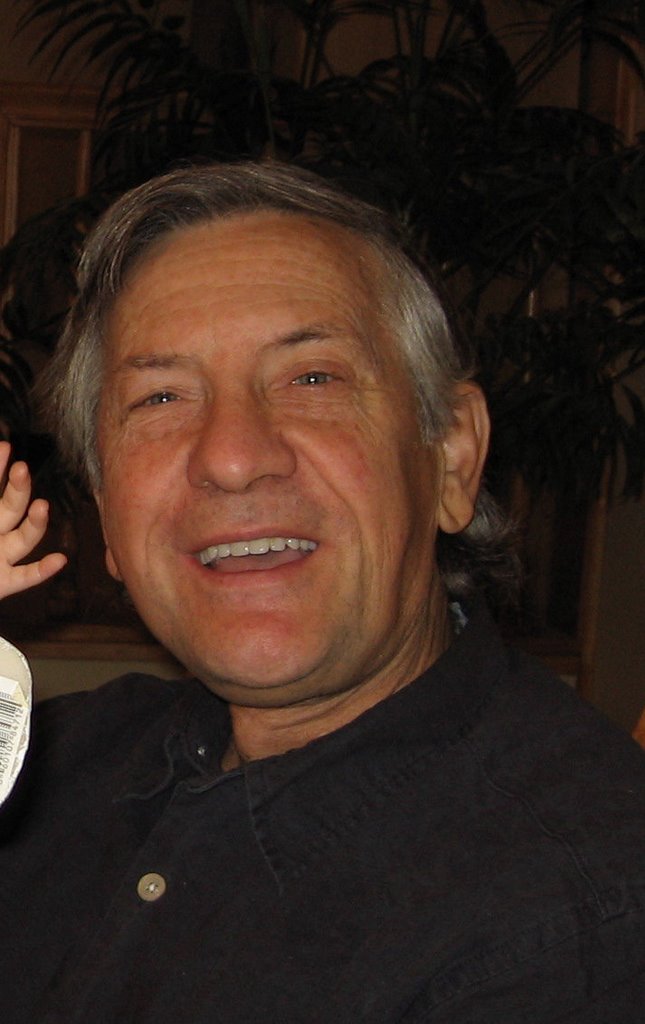 Since my photo in the profile is a fairly old one, it might be a good idea to post a newer image.
Subscribe to:
Posts (Atom)
